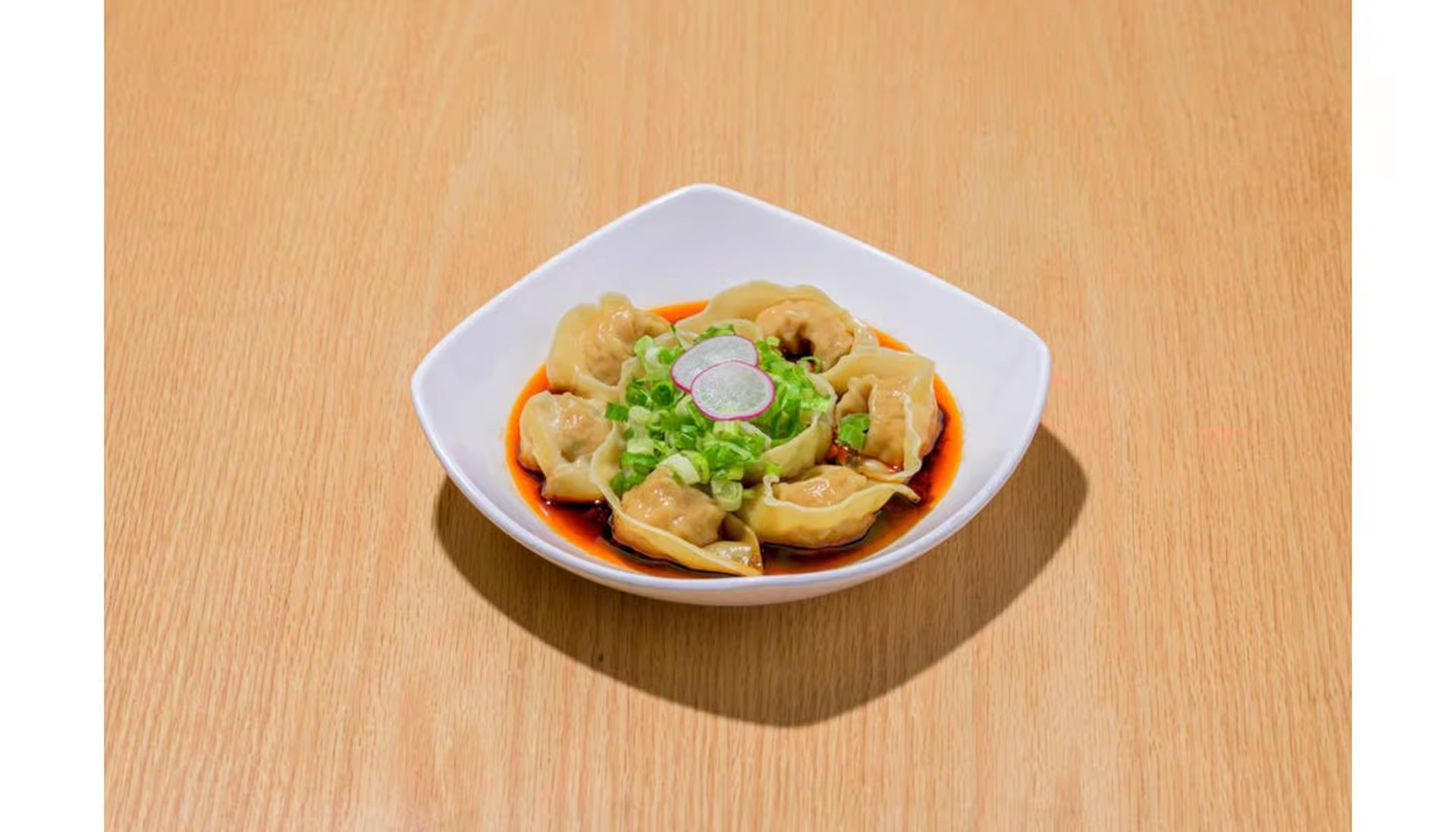
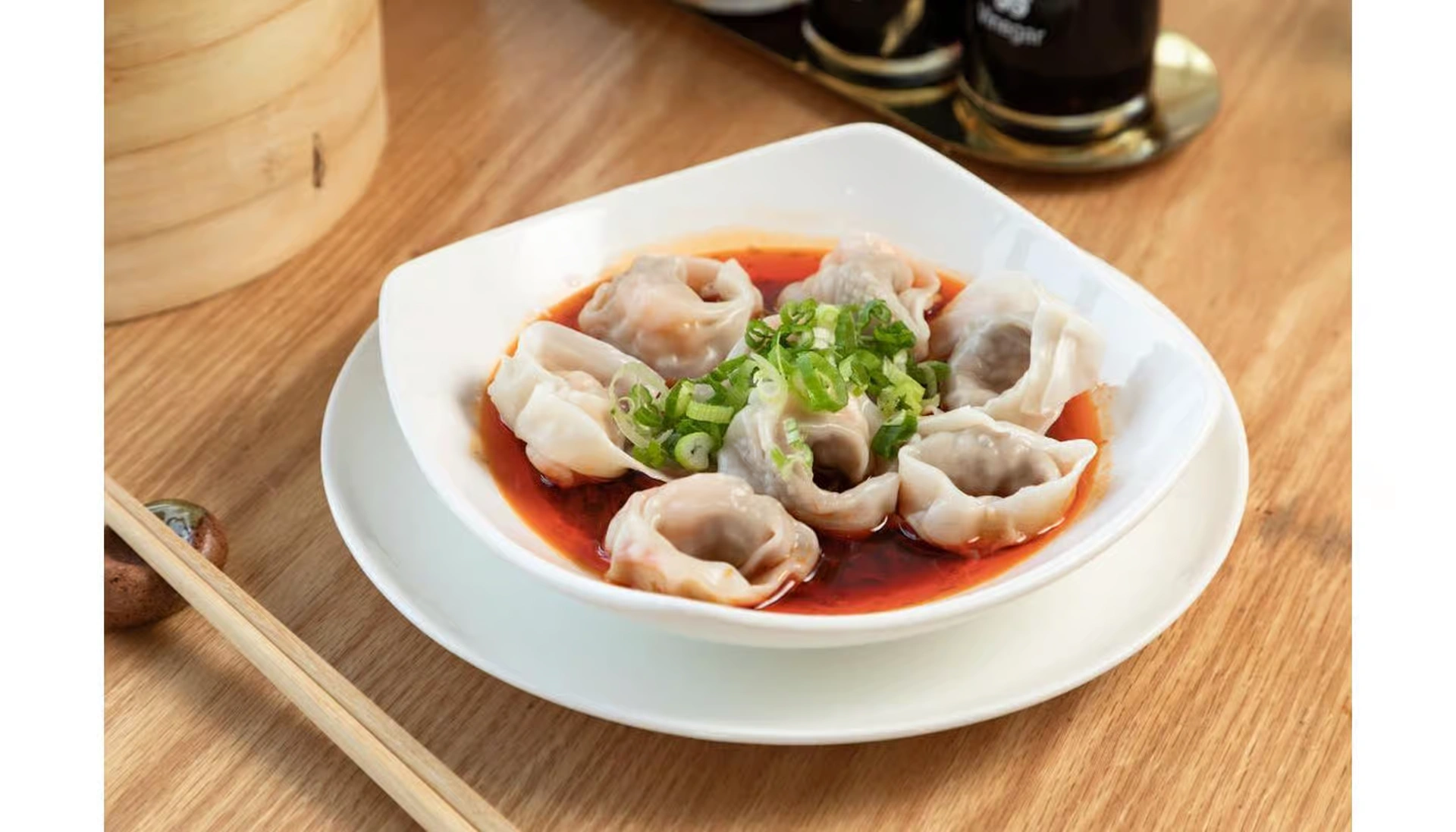
Three bowls, all spicy. Sichuan-style red-oil wontons in pork & shrimp, chicken, or vegan — eight delicate, ruffled wrappers swimming in chili oil, soy, vinegar, garlic and scallion. The dish that bridges dim sum and Sichuan stir-fry — and the most-ordered spicy item on the menu after kung pao.
Wontons (餛飩) are a distinct family from jiaozi-style dumplings or xiaolongbao. The wrapper is thinner, square, and sealed loosely — the pinched corner gathers in ruffled folds that catch sauce. The filling is denser and smaller. The cooking method is poaching in water, not steaming.
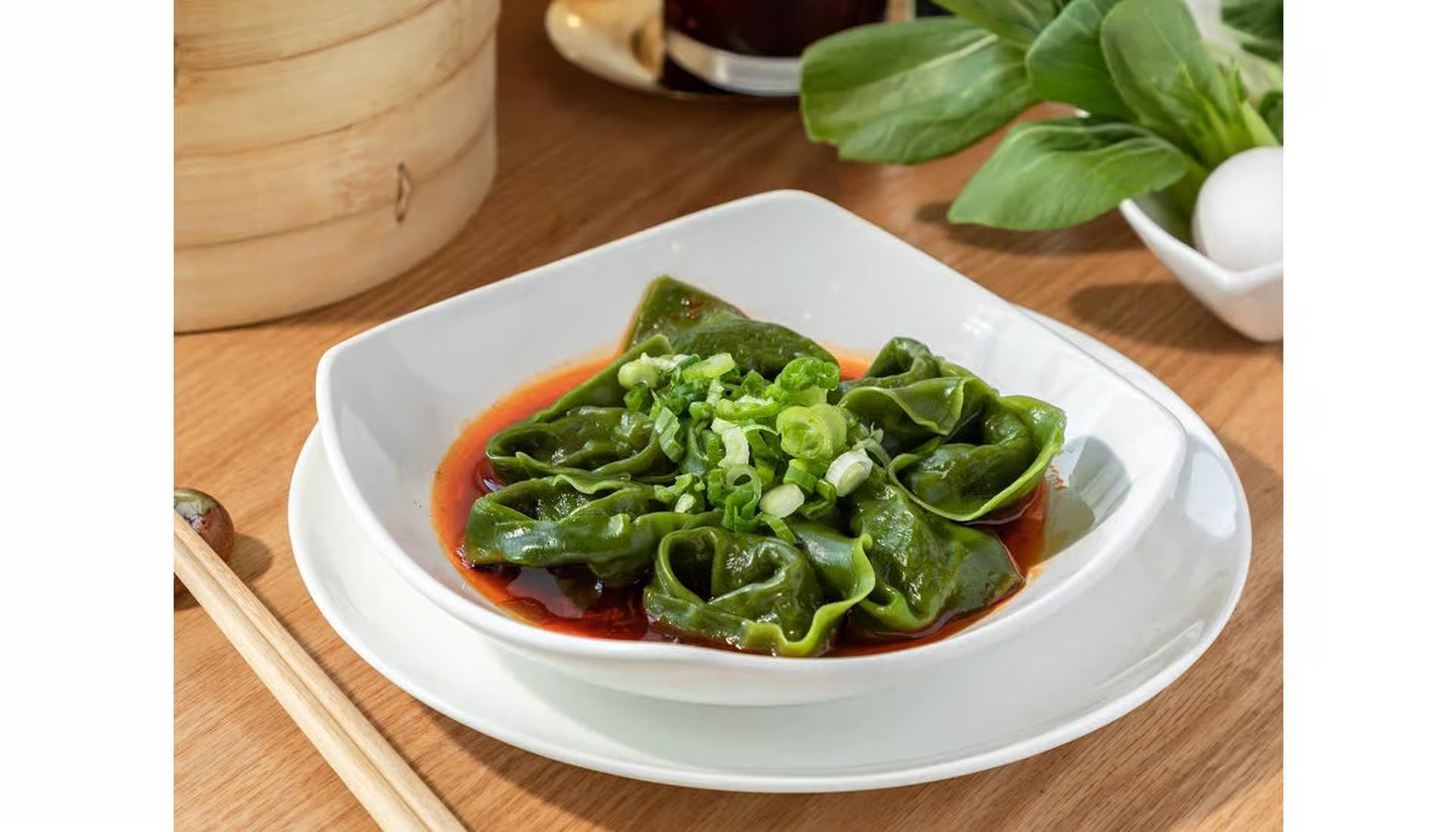
The Ugly Dumpling wonton page is specifically Sichuan-style red-oil wontons (红油抄手 hóng yóu chāo shǒu) — every dish on the page is dressed in the same chili-oil-soy-vinegar-garlic dressing, finished with scallion. The variety is in the filling: Pork & Shrimp ($11) is the canonical version; Chicken ($10) layers chicken with pork and shrimp for depth; Vegan ($10) uses a green wrapper and vegetable filling. Eight pieces per order across all three.
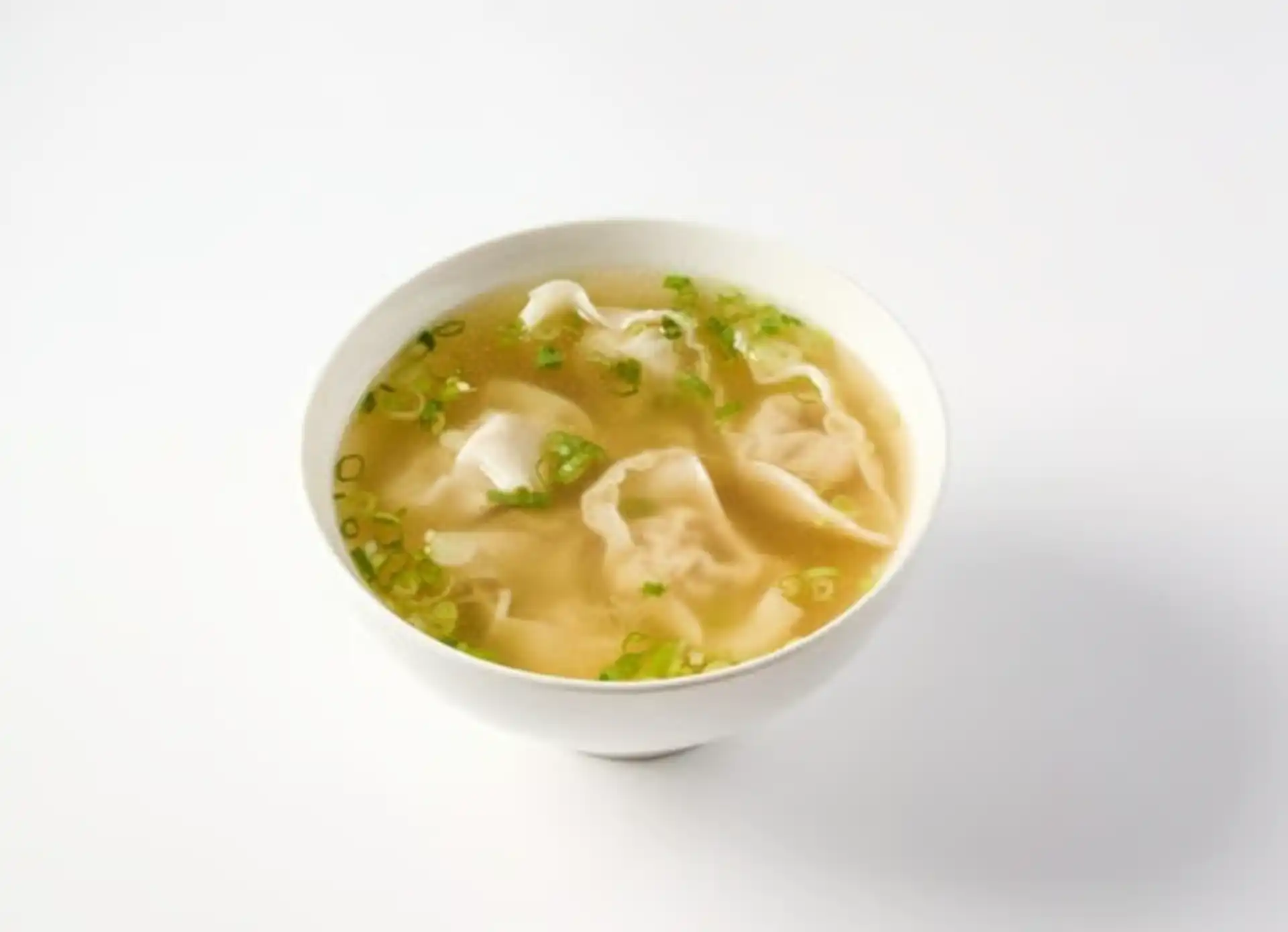
If you want wontons in clear broth rather than chili oil, those are listed under Soup — not here. The Pork & Shrimp Wonton Soup and Chicken Wonton Soup are the broth versions. This page is the spicy chili-oil branch only.
Eight pieces each, same chili-oil dressing, three fillings.

Eight pork-and-shrimp wontons in chili oil, soy and vinegar, topped with scallions. The canonical Sichuan red-oil dish.
View dish →
Chicken-blended filling (with traces of pork and shrimp for depth) in the same chili-oil dressing. Slightly milder.
View dish →
Green plant-based wrapper, vegetable filling, finished with chili oil and scallion. Fully vegan.
View dish →Filling, allergens, heat, calories and price — all three at a glance.
| Dish | Filling | Wrapper | Allergens | Heat | ~Cal | Pieces | Price |
|---|---|---|---|---|---|---|---|
| Spicy Pork & Shrimp Wontons | Pork + shrimp | Wheat (white) | Wheat, soy, shellfish | ●●●○○ | 560 | 8 | $11 |
| Spicy Chicken Wontons | Chicken / pork / shrimp | Wheat (white) | Wheat, soy, shellfish | ●●●○○ | 520 | 8 | $10 |
| Spicy Vegan Wontons | Mixed vegetables | Plant-based (green) | Wheat, soy | ●●●○○ | 440 | 8 | $10 |
All three carry the same Sichuan red-oil dressing and similar heat. Calories are approximate per full order including sauce.
Most U.S. diners under-mix and over-rush red-oil wontons. Here's the four-step Sichuan ritual.
The chili oil sits on top, the vinegar pools at the bottom. Toss the bowl gently with chopsticks for 10 seconds before the first bite — every wonton should glisten with sauce.
Each wonton holds a small reservoir of sauce in its ruffles. Lift it onto a spoon, eat it in one bite, and let the spoon catch the runoff so the sauce becomes part of the bite.
The leftover chili oil + vinegar + soy is the most concentrated flavor in the bowl. Slurp the last spoonfuls — it's the equivalent of finishing a soup. In Chengdu, leaving the sauce is considered wasteful.
Counter the heat with Cucumber Salad or anchor it with White Rice — the rice soaks any sauce you don't want to drink.
The classic Sichuan red-oil dressing is roughly:
All wontons contain: wheat (wrapper), soy (sauce), sesame (chili oil), Sichuan peppercorn (some locations).
Pork & Shrimp: pork, shellfish · Chicken Wontons: contain trace pork & shrimp for depth — not pork-free, not shellfish-free · Vegan Wontons: no animal products in filling, wrapper or sauce.
Heads-up for chicken-only diners: the Chicken Wontons are not 100% chicken — request the Vegan Wontons instead if you need pork-free + shellfish-free.
Six diner profiles, six clear answers.
Spicy Pork & Shrimp Wontons ($11) — the canonical red-oil bowl, most-ordered of the three.
Pork & Shrimp Wontons — the brand's photogenic chili-oil bowl, deep red against white china.
Wontons originated in northern China — Tang-dynasty texts mention them as hundun (餛飩) — and over centuries split into regional schools. Cantonese wontons (the wun tun mein of Hong Kong noodle shops) settle into clear pork-bone broth with thin egg noodles. Sichuan wontons took an opposite path.
In Sichuan they're called chao shou (抄手) — literally "folded arms" — describing how the wrapper crosses over itself in the closing pleat. The Sichuan version was poached in plain water, then dressed in chili oil, soy, vinegar and garlic at the table. By the early 20th century, Chengdu's Long Chao Shou (龙抄手) restaurant had standardized the dish into the bowl we recognize today: eight wontons, chili-oil dressing, scallion finish.
Ugly Dumpling's three-wonton lineup — pork & shrimp, chicken-blend and vegan — is a modern American adaptation. The kitchen carries the canonical pork-shrimp version verbatim from Chengdu, then adds chicken (a U.S.-favoring filling) and a green-wrapper vegan option (a recent mid-2010s innovation that's now standard at modern Sichuan-American restaurants).