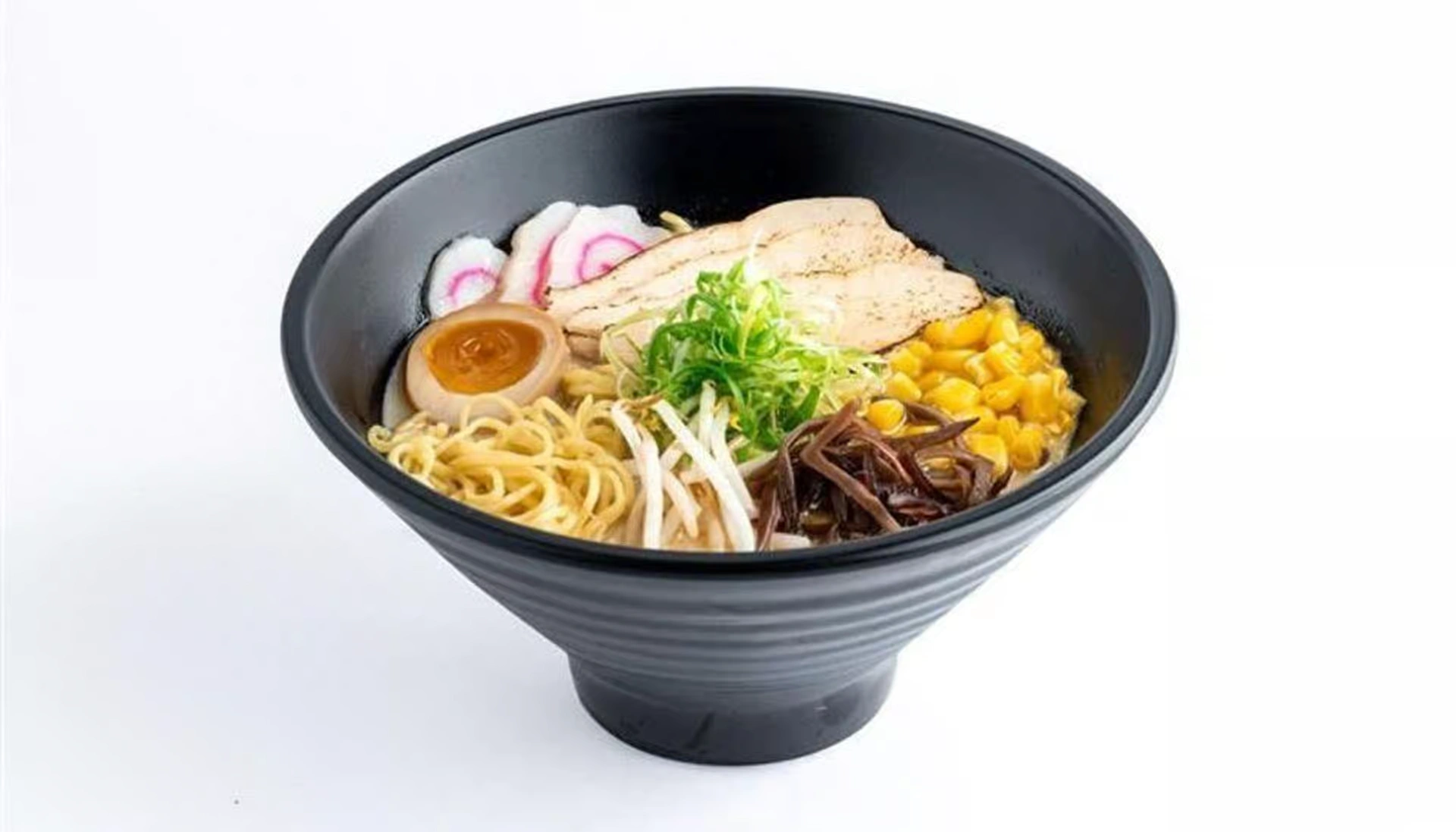
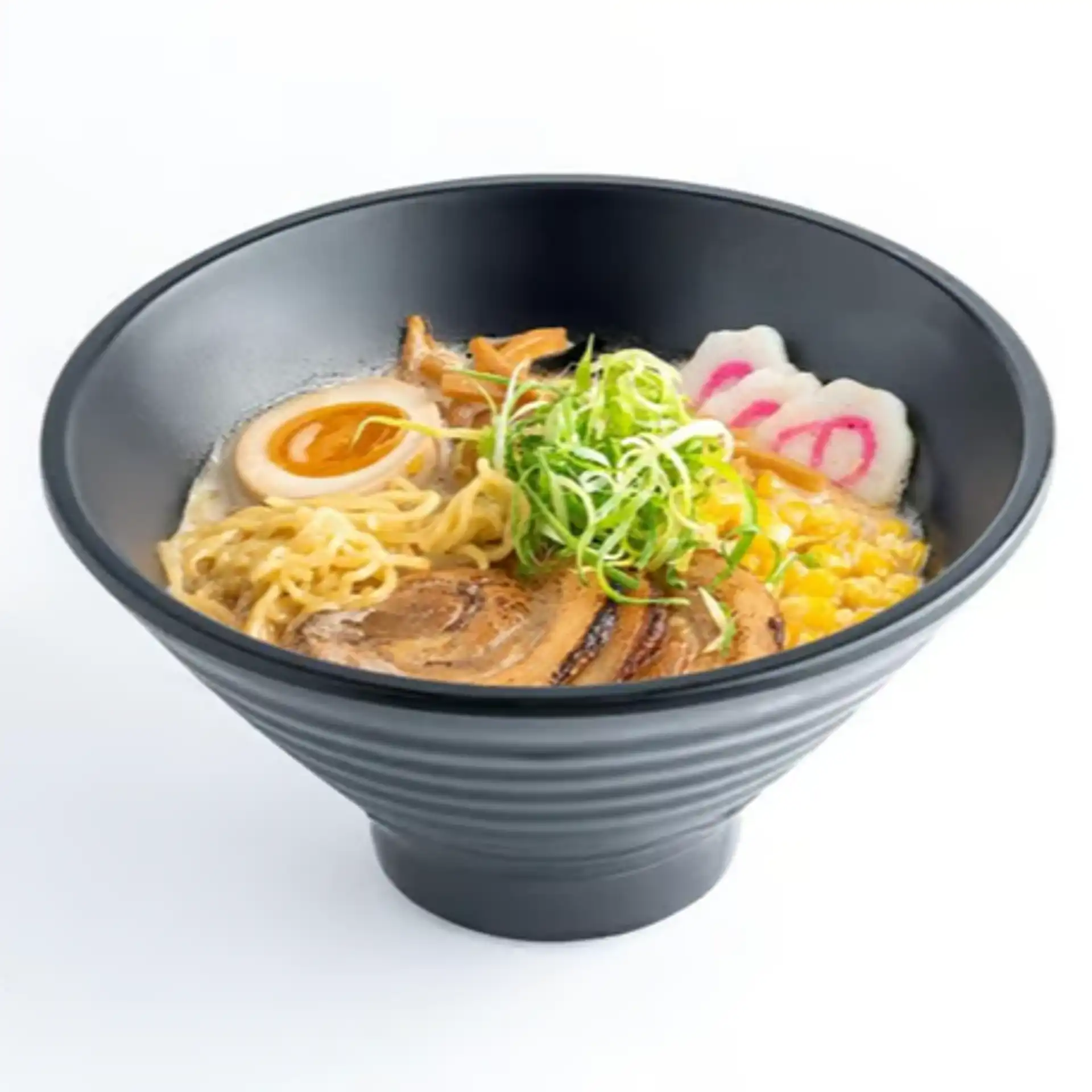
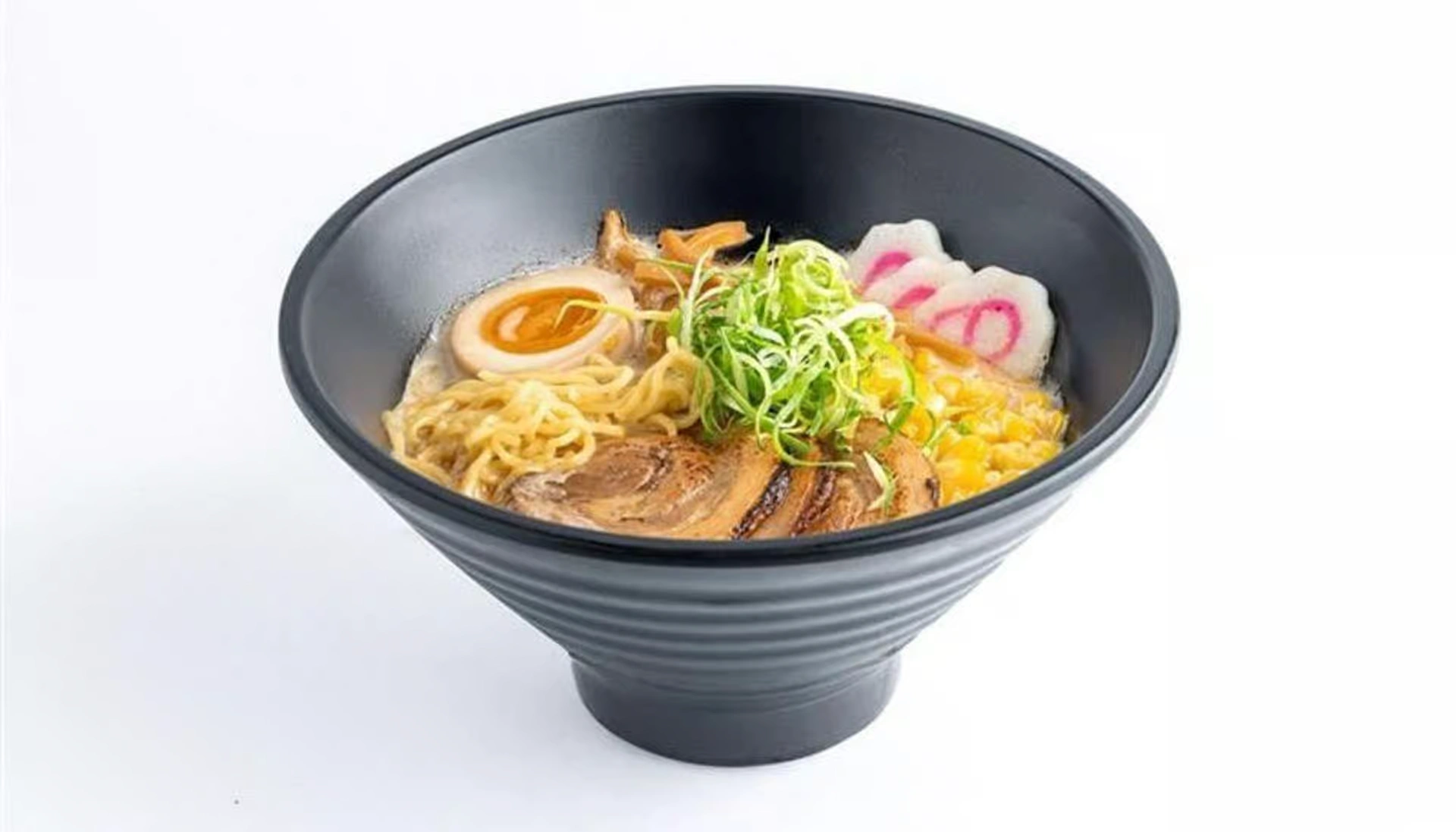
Ramen · Tonkotsu · Pork Bone Broth
Tonkotsu ramen with rich, milky pork bone broth — slow-simmered until silky. The Japanese standard, done carefully. Chashu pork, soft-boiled egg, nori and bamboo shoots round out the bowl.
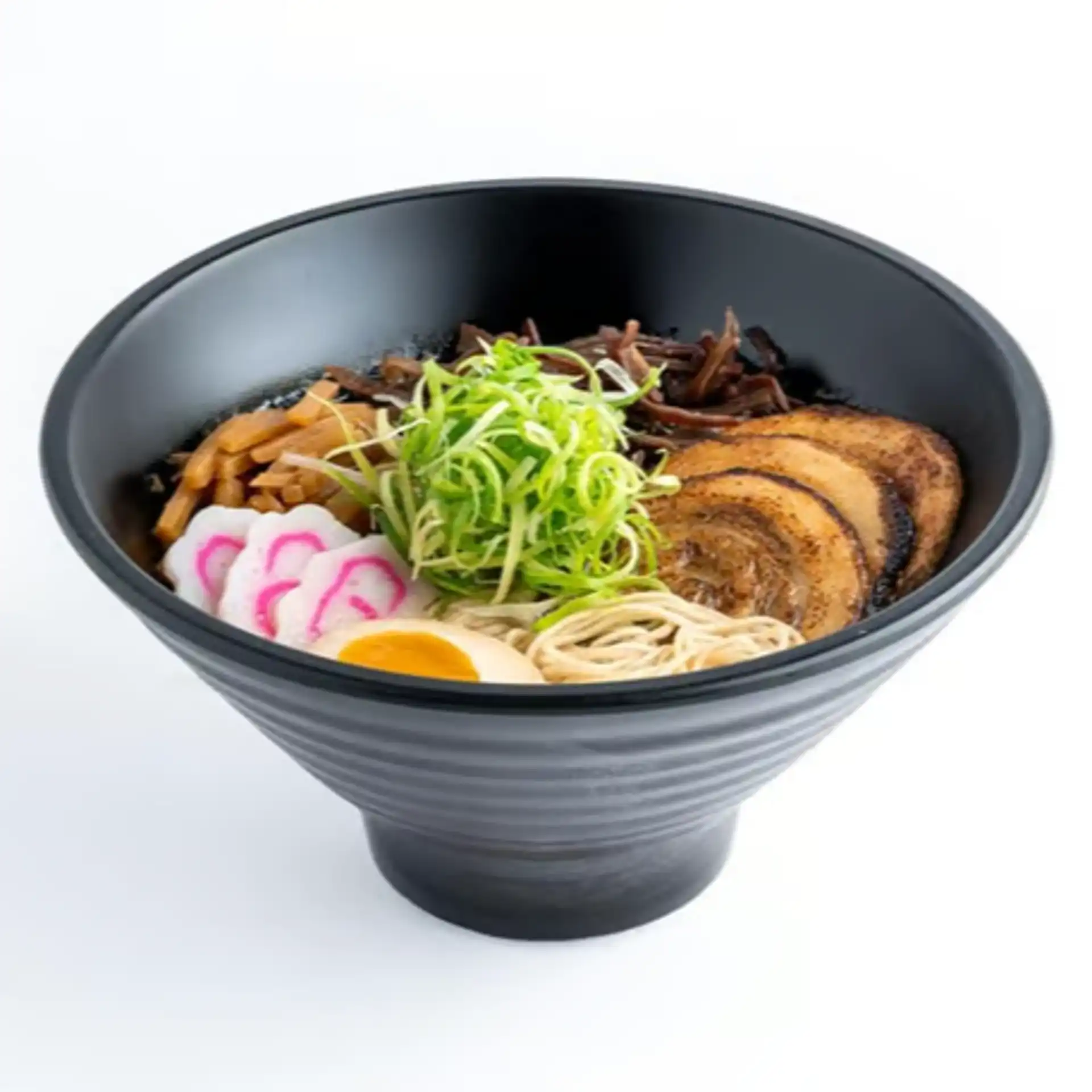
Tonkotsu is the most labor-intensive of all ramen broth styles and the one with the most devoted following. The technique is deceptively simple in description: pork bones are blanched to remove impurities, then boiled at a vigorous rolling boil for many hours — sometimes twelve or more. The aggressive heat does something that gentle simmering cannot: it emulsifies the collagen and marrow fat into the broth, turning it opaque white and giving it a body and richness that coats the back of a spoon.
The result is a broth that is simultaneously heavy and somehow clean — the pork flavor is concentrated and direct, the texture almost creamy, the finish long. It is the most calorie-dense and fat-rich of the four ramen options at Ugly Dumpling, and that is exactly what tonkotsu drinkers come for. A thin, light tonkotsu would be a contradiction in terms.
Toppings follow the Hakata-style template: chashu pork belly, soft-boiled marinated egg, nori, bamboo shoots, and scallions. The noodles are thin and straight — the traditional tonkotsu pairing, designed to carry the thick broth rather than compete with it.
Per full bowl. Estimates based on standard recipe; actual values may vary.
| Nutrient | Amount |
|---|---|
| Calories | 820 |
| Protein | 36 g |
| Carbohydrates | 78 g |
| Fat | 38 g |
| Sodium | 1740 mg |
Allergens: Wheat, Soy, Pork, Egg, Sesame.
At 820 calories and 38g of fat, tonkotsu is the most indulgent of the four ramen options. The emulsified pork bone broth is a meal in itself before the noodles and toppings even factor in. Order this when you want to be full — properly, satisfyingly full — after one bowl.
Tonkotsu originated in Fukuoka and has become one of the most recognized ramen styles globally. Ordering it at a new restaurant is the most reliable way to benchmark the kitchen's ramen capability — a good tonkotsu requires hours of active cooking and cannot be faked with shortcuts.
Hours of rolling-boil cooking emulsify collagen and marrow fat into the liquid, creating the milky white, body-rich broth that defines tonkotsu. Cannot be replicated quickly or cheaply.
Braised pork belly, finished with caramelization, sliced over the bowl. In a rich tonkotsu, the chashu is the anchor — its fat rendering further into the broth as you eat.
The ajitsuke tamago — soy-marinated, soft-boiled, jammy yolk. Break it over the noodles midway through the bowl and watch the yolk enrich the broth further.